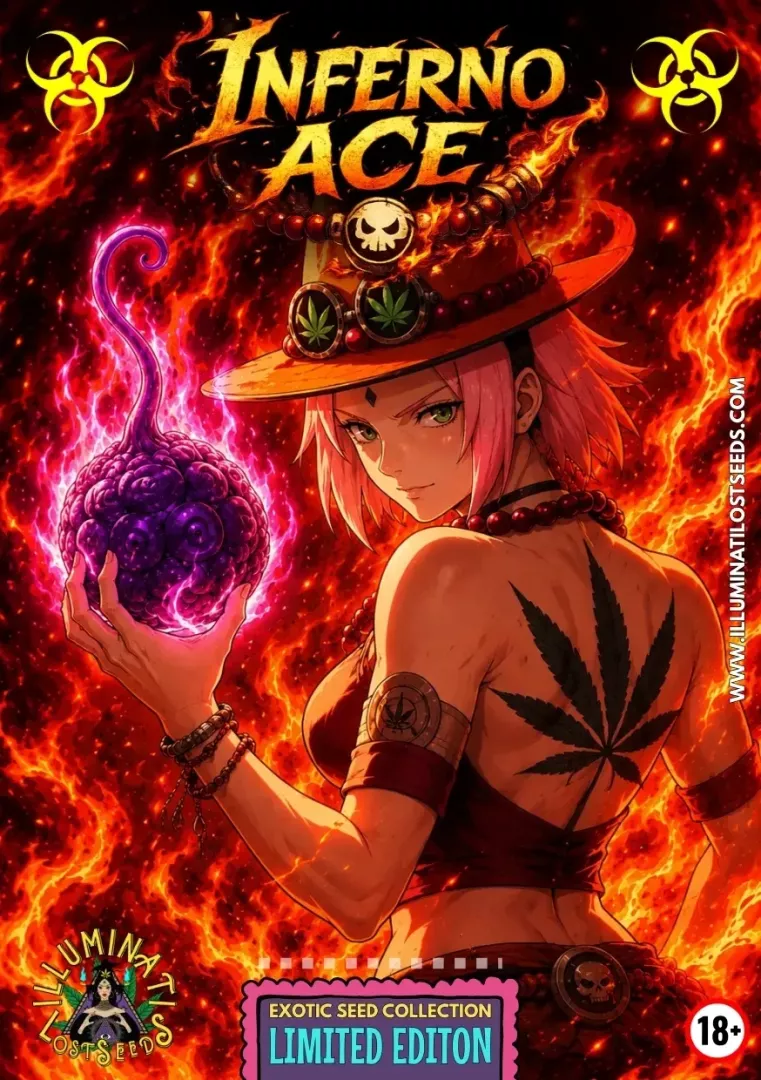
Inferno ACE
Its name and dark visual identity make Inferno ACE one of the most natural leading characters in this Halloweed selection.
View product
Author: Bartholomew Alen – Grow Island
Jack-o'-lanterns, horror films, costumes, sweets, ghosts and witches – and, increasingly, cannabis leaves, Halloweed lettering, sinister strain names and 420-friendly Halloween parties. At first glance, the connection may seem unusual. In modern popular culture, however, cannabis and Halloween have found each other with surprising ease .
This is not because an ancient cannabis ritual once formed part of Halloween. No reliable historical connection of that kind is known. The overlap we see today is much younger: counterculture, horror cinema, adult Halloween parties, stoner humour, imaginative strain names and the legendary enthusiasm for sweets have together produced what is now widely called Halloweed . Grow Island's earlier feature on Halloween, cannabis and special strains for the dark season explores the seasonal genetics side of this world in more detail.
But how did we travel from ancient Celtic celebrations to an October in which cannabis menus feature names such as Ghost, Devil, Inferno and Zombie, alongside genetics that sound as if they were written for a horror film?
To understand that journey, we first need to step back in time.
The connection between cannabis and Halloween is a modern cultural phenomenon. Halloween's historical roots are much older, while Halloweed is a contemporary wordplay and lifestyle term. That is precisely what makes the subject interesting: two independent cultural worlds have come together through films, music, humour, parties and modern cannabis culture.
Modern Halloween stands on centuries of religious, folkloric and popular tradition. One of its important predecessors is generally considered to be the ancient Celtic festival of Samhain , which was associated with the end of summer, the close of the harvest and the beginning of winter. Over time, these customs interacted with the Christian observances of All Saints' Day and All Souls' Day. All Hallows' Eve eventually developed into the celebration now known as Halloween.
The arrival of the darker season already carried powerful symbolism. Days became shorter, the harvest had been gathered, winter approached, and death, impermanence and the cycle of nature were far more immediate parts of everyday life than they are for many people today.
Against this background, it is easy to understand why ghosts, supernatural beings, fire, masks and protective rituals became part of the festive imagination. Halloween was never built from one single custom. It is a cultural mixture that changed as communities moved, religions interacted and local traditions were retold.
A distant predecessor of modern dressing up can be found in customs in which people wore masks or disguises in connection with beliefs about spirits and supernatural beings. Today's vampire, zombie, film-character or giant cannabis-leaf costume naturally comes from a very different cultural environment.
The central idea has nevertheless survived: Halloween is the night on which it is perfectly acceptable to become somebody or something else for a few hours .
That temporary freedom is more important to the modern cannabis connection than it may initially appear. Both worlds enjoy visual identity, play, exaggeration and the opportunity to step outside everyday expectations without having to explain every detail.
The classic jack-o'-lantern was not always made from the large orange pumpkin now associated with American Halloween. In Ireland and other regions, people historically hollowed and carved vegetables including turnips. In the United States, the larger and easier-to-carve pumpkin became the best-known symbol of the tradition. Over time, the lantern also became linked to stories about a wandering figure called Jack.
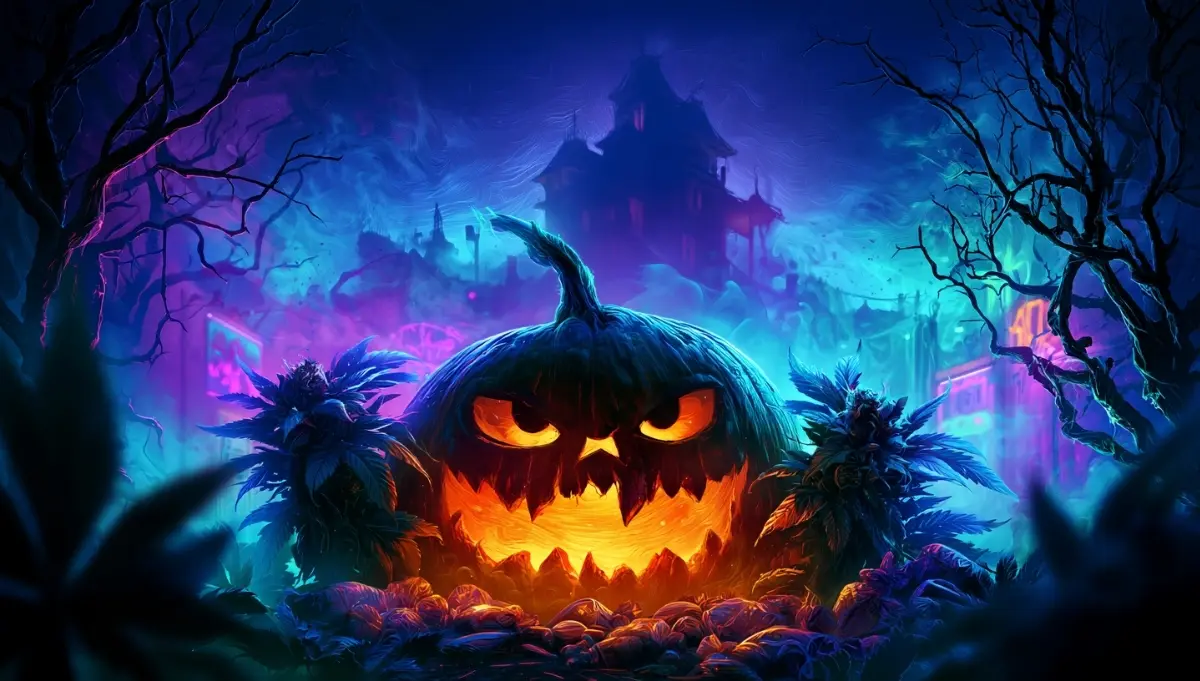
Today, a Halloween lantern can display almost any design: the familiar toothy grin, a horror-film logo, a band, a meme – or a cannabis leaf. The object remains recognisably Halloween even when its visual language changes completely.
The origins of going from house to house for food or gifts are complex and are connected with several older customs. Trick-or-treating in its modern American form became especially widespread around the middle of the twentieth century. From that point onward, sweets became one of Halloween's undisputed leading characters.
Here we already come dangerously close to stoner culture.
After all, when a festival combines strange films, late-night parties, creative costumes and an entire mountain of snacks , it was only a matter of time before cannabis culture made itself at home.
A large part of Halloween today is no longer experienced primarily as a religious observance or a traditional folk festival.
It has become a complete pop-culture season.
In October, horror films move onto the front pages of streaming services, shops fill with skulls and artificial cobwebs, limited-edition drinks and sweets appear, clubs organise costume nights, and social media glows orange and black for weeks.
Halloween has become a largely secular and strongly commercialised celebration in many parts of the world. That process has made it remarkably adaptable. Local customs can coexist with global film characters, internet jokes and costumes inspired by music, games or current events.
Perhaps more importantly, Halloween is no longer only for children.
Trick-or-treating remains central to the celebration. For adults, however, Halloween is increasingly a costume party, horror marathon, themed dinner, concert, festival or simply a welcome excuse to do something unusual at the end of October.
Few celebrations make so much room for the absurd. On Halloween, arriving as a zombie, witch, anime character or enormous joint is not considered strange. For one night, being different is not something that makes you stand out; it is practically the dress code.
The modern cultural meaning of cannabis cannot be understood by looking at the plant only as a botanical subject.
During the second half of the twentieth century, marijuana became closely connected in Western popular culture with counter-movements, music, art, alternative ways of living and the straightforward belief that not everything has to be done in the way the majority expects .
In the American hippie culture of the 1960s, cannabis use became a visible element of the era. Hippies rejected parts of mainstream social convention, while rock music, psychedelic culture, communal living and marijuana became closely associated with the same environment.
The Human Be-In in San Francisco in 1967, for example, attracted tens of thousands of people and became a precursor to the later Summer of Love. Music, poetry, political activism and psychedelic counterculture met at a single event. Cannabis did not create that entire movement, but it became one of its most recognisable cultural symbols.
Much of what is now called stoner culture grew from this world: freedom, humour, music, visual exaggeration, unusual graphics, outsider identity and a healthy measure of self-irony. Grow Island's article on Cali weed and the appeal of Californian genetics shows how regional identity and cultural storytelling later became part of the language of modern genetics. Stories and documented connections involving well-known people can also be found in the feature on ten famous historical figures connected with cannabis .
Those very elements also make Halloween attractive.
There is no need to turn this into an unnecessarily complicated theory.
Cannabis culture and Halloween share one very simple denominator:
Both love the strange.
For decades, stoner art has featured psychedelic eyes, UFOs, mushrooms, demons, skulls, cartoon characters, living plants and almost every bizarre creature the imagination can produce.
Halloween's answer is essentially:
"Excellent. In October, we need even more of that."
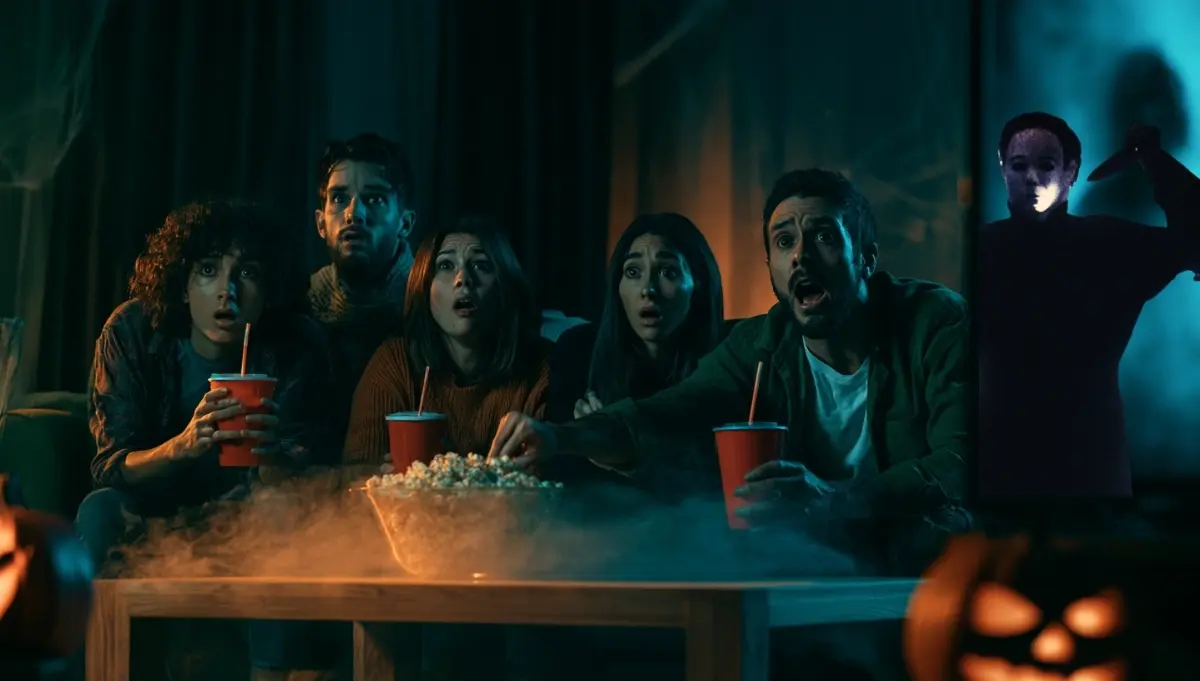
If you have ever watched a horror film with a group in which somebody asked, at every suspicious shadow, "Did you see that too?", you already understand the concept.
Cannabis and shared film nights have long belonged to stoner popular culture. Horror adds suspense, a dark room, unusual imagery, an intense soundtrack and, naturally, that classic moment when somebody walks into the kitchen halfway through the film and returns considerably faster than planned. The more serious side of attention, absorption and altered experience is considered in Grow Island's article on flow states and cannabis .
The connection has become familiar enough that cannabis magazines regularly publish strain lists specifically for Halloween and horror-film evenings. Names such as Ghost OG, Alien OG, Pennywise, Dante's Inferno, Hellraiser OG and Ghost Train Haze frequently appear in these selections.
That does not mean a particular genetic was literally "made for horror films". It demonstrates how strongly contemporary cannabis branding relies on cinematic, musical and pop-cultural associations. The name starts the story before anyone has looked at lineage, aroma or practical product information.
A memorable Halloween film night does not require the most terrifying film ever made. An old, completely absurd B-horror picture, a bowl of popcorn and a few friends may create a far better evening than the most serious new premiere.
There is no single reliably documented origin story for the very first use of the word. We therefore do not credit its invention to a particular person.
Its meaning, however, requires no dictionary:
Halloween + Weed = Halloweed.
The word now appears regularly in cannabis magazines, specialist-store campaigns and communication surrounding 420-friendly Halloween events. It is short, instantly understandable and visually useful. A single changed syllable connects the familiar October celebration with the language of contemporary cannabis lifestyle.
Halloweed works so well because it is not trying to invent a new historical festival.
It simply translates an existing Halloween evening into the vocabulary of stoner culture.
There is no official rulebook. That may be the best part.
An adult Halloweed programme might include:
The shared centre is atmosphere rather than consumption itself. Halloweed can work as a film night, a design idea or a playful seasonal campaign even when no cannabis is consumed at all.
Its visual world needs very little explanation: neon green, violet, black, orange, skulls, cannabis leaves, UFOs, witches and a generous amount of artificial fog.
One of stoner culture's greatest strengths has always been its ability to laugh at itself.
Halloween provides the perfect stage for that instinct.
You can arrive as a giant cannabis leaf. Or a joint. A grower in a laboratory coat. The Mad Scientist of Terpenes. A green witch. A classic Cheech and Chong reference. You can even take a strain name and turn it into a literal costume.
It is no coincidence that lifestyle publications have explored Halloween outfits built from cannabis names and jokes. The "Halloweed costume" has become a recognisable miniature genre in stoner media because the source material is almost unlimited.
That depends.
If you need a ten-minute presentation to explain why you are dressed as a "terpene profile", the concept may have been overworked. If somebody looks at you and immediately shouts, "You actually came as Kush Vader!", you have won the evening.
Few cultural crossovers are this obvious.
One of the best-known modern symbols of Halloween is a pile of sweets.
And one of the most familiar stereotypes in stoner culture can be expressed in a single word:
Munchies.
That is already the entire argument.
No marketing department was required.
During the twentieth century, trick-or-treat culture became increasingly tied to individually wrapped sweets. By the 1970s, they had become the dominant American Halloween gift and a powerful part of the season's commercial identity.
Modern Halloweed naturally continues the same logic: popcorn, pizza, nachos, gummies, chocolate, pumpkin desserts and every food combination that might seem excessive under ordinary circumstances.
On Halloween, however, there is almost no such thing as too many snacks.
If cannabis-infused food is present at an adults-only event in a place where that is legally permitted, it must be clearly separated from ordinary sweets, unmistakably labelled and stored where children cannot reach it.
This is especially important on Halloween because many similar-looking sweets and snacks can be in the same place at the same time. A themed wrapper, colourful gummy or homemade dessert must never be allowed to create uncertainty about what it contains.
Never give cannabis or cannabis-containing products to children, and never store them with Halloween sweets intended for children. Adult products must be clearly marked and securely stored. Local laws and all product instructions must always be followed.
In the cannabis world, strain names can sound as if somebody threw words from a horror film, a video game and a sweet shop into the same hat.
Ghost.
Alien.
Poison.
Zombie.
Devil.
Inferno.
Monster.
And that is only the beginning.
Lists of real genetics suitable for a Halloween theme include names such as Ghost OG, Alien OG, Pennywise, Dante's Inferno, Hellraiser OG, Jack the Ripper and Ghost Train Haze .
This is interesting because modern cannabis branding relies heavily on storytelling.
The name of a genetic is not merely a label.
It is a character.
A mood.
A visual identity.
And sometimes an entire universe.
That is why, in an earlier Grow Island Halloweed feature, we could transform our own Illuminati Lost Seeds genetics into horror-film characters. Names such as Inferno ACE, Enoch, Vaticaan Archives, Nimbusz and Akathcuki Jutsu fit an October story with almost no effort. Behind the imaginative name, however, there is still a real genetic line and a real aromatic profile. The guide to the entourage effect of cannabis terpenes helps separate creative branding from sensory characteristics. For another dramatic example of a strain name becoming a complete character, see Monster Maker: the beast .
If you want to understand what the word "feminized" means behind an imaginative name, the overview of feminized and autoflowering cannabis seeds is a useful starting point. At the end of this article, we also present five Grow Island products whose names fit the Halloweed atmosphere particularly well.
Consider for a moment what a classic adult Halloween party contains.
Strange lighting.
Music.
A great deal of food.
People wearing ridiculous costumes.
At least one person has been carrying a plastic scythe around for several hours.
A horror film is playing in one corner.
And nobody can find the person who said ten minutes ago, "I am only stepping outside for a moment."
It is not difficult to understand why this became a subject of cannabis lifestyle culture.
Halloweed parties now appear in cannabis magazines, specialist stores and community events. Repeated ideas include pumpkin carving, horror marathons, costume contests and relaxed themed evenings. If the seasonal imagery leads you towards real plants rather than fictional characters, the article Cannabis Clones from Grow Island – Strength from the Start provides practical background on healthy beginnings.
Activities involving cannabis consumption are, of course, appropriate only for adults and only where local law permits them. Grow Island's overview of cannabis laws in Austria is a useful starting point for Austrian readers, but it does not replace checking the law that applies at the place and time of an event.
Once we set aside pumpkins, green leaves and easy wordplay, five main reasons remain.
Halloween is not historically the same kind of counterculture as cannabis movements. In its modern form, however, it creates a temporary space in which ordinary rules and expectations can be turned upside down.
For one evening, people are allowed to look grotesque, strange or completely absurd.
Cannabis culture also spent a long time outside the mainstream. The two worlds therefore found a shared visual and social language with very little difficulty.
Films, television series, cartoons, hip-hop, reggae, rock, science fiction, anime and memes: cannabis branding draws inspiration from practically every corner of culture.
Halloween does exactly the same.
At a single costume competition, Dracula, Darth Vader, Pikachu, a current internet meme and a giant cannabis leaf can all stand next to one another.
Nobody considers the combination unusual.
Packaging design, close-up images of resin-covered flowers, psychedelic graphics and strain illustrations all play major roles in cannabis culture.
Halloween is equally visual: orange light, fog, neon, black, violet, blood red, skeletons and grotesque characters.
The two visual languages are almost too easy to combine. A leaf becomes a silhouette in moonlight, a purple package becomes a magical spellbook, and a strain named Nimbusz practically supplies its own fog machine.
Modern cannabis culture is no longer concerned only with the plant. It includes communities, events, cups, music gatherings, forums, specialist media and complete lifestyle brands.
Halloween is also a social celebration.
That remains true even when the entire group activity consists of five people sitting on a sofa and trying to decide who should be the first to enter the dark kitchen.
This may be the most important point.
Halloween can genuinely be frightening.
It can also be gloriously ridiculous.
Cannabis culture works with the same duality. Serious genetics, sophisticated cultivation techniques and well-founded specialist knowledge can comfortably coexist with an absurd strain name or a person wearing a joint costume.
That combination creates culture rather than merely a product category.
The point is not to declare Halloween a "cannabis festival". It is not one. Instead, modern cannabis culture recognised in Halloween the same creative, irregular, communal and slightly absurd energy that had long existed in its own world.
A classic activity that needs no reinvention – only perhaps a different design. Ghost, alien, skull or cannabis leaf: on 31 October, any of them works as decoration.
Halloween is one of the rare occasions on which the result often improves as the idea becomes more absurd. Stoner wordplay provides an almost unlimited supply of material.
Ordinary sweets remain for children. Adults may have a separate snack table, provided the two worlds are kept securely and unmistakably apart.
Whether it is a classic slasher, psychological horror or a B-movie whose rubber monster visibly has a zip running down its back, Halloween rarely feels complete without a film.
Black light, LEDs, a fog machine, artificial cobwebs and neon-green details. Halloweed design feels most at home somewhere between a horror-film set and a psychedelic concert poster.
Witch-finger biscuits, skull-shaped pizza, red popcorn or simply enough sweets to guarantee that somebody questions the decision in November.
An old ghost story or the account of a grower who discovered mould three days before harvest: the difference in atmosphere is surprisingly small. In the second case, however, the story should be followed by the practical guide to identifying, preventing and treating mould on cannabis .
No reliable historical evidence is known to show that cannabis was a defining part of classical Halloween or Samhain traditions. The connection between the two cultural worlds is essentially a modern phenomenon shaped by popular culture, parties, humour, branding and lifestyle media.
Halloweed is a modern blend of the words "Halloween" and "weed". It is used for Halloween programmes, parties, campaigns and lifestyle content with a cannabis theme. Many cannabis publications and businesses now use the expression, but it is a playful cultural label rather than the name of a historical festival.
Modern genetics are named through combinations of parent lines, aromas, popular-culture references, humour and brand building. This produces names inspired by horror, science fiction, sweets, celebrities, weather, locations and fantasy. A memorable name helps a product stand out, but buyers should still examine the real data behind it.
Familiar customs include costumes, trick-or-treating, carving jack-o'-lanterns, Halloween parties, haunted houses, horror films, ghost stories and seasonal sweets. The historical origins of several practices are much older and more complex than modern American Halloween.
House-to-house trick-or-treating became a defining part of modern American Halloween during the twentieth century. Individually wrapped sweets spread especially from the 1950s onward and had become the dominant Halloween gift by the 1970s.
Halloween has an instantly recognisable visual language and is easy to connect with stories from popular culture. Many cannabis genetics already carry names with a horror or fantasy mood. Humour, music, film and shared experiences, all important within stoner culture, fit naturally with modern adult Halloween events.
The history of Halloween is far older than modern cannabis culture.
From Samhain, All Hallows' Eve and old folk beliefs, a long road led to today's jack-o'-lanterns, trick-or-treating, costume contests and horror marathons on streaming platforms.
Cannabis arrived from another direction.
Twentieth-century counterculture, music, art and, later, modern legalisation and lifestyle movements shaped the visual and social world now described as stoner culture.
Then these two universes met.
It became clear that they had a surprising amount in common.
Both love costumes.
Both love unusual visual worlds.
Both love films and popular-culture references.
Both can easily become the basis for a shared community event.
And at least one of them guarantees that there will be sweets in the house at the end of October.
That is how Halloween became Halloweed .
Not a newly discovered historical festival, but one of the most entertaining seasonal branches of modern cannabis culture.
In the Halloweed series, we have already explored major nightmares for growers and the Illuminati Lost Seeds genetics whose names seem to have been made for Halloween.
The next stop is Halloween night itself : horror films, weed culture, stoner traditions and everything that looks better on 31 October with a little fog and a carved pumpkin nearby.
The names and visual identities of the following five feminized Illuminati Lost Seeds genetics fit this article particularly well. Their product images are displayed completely inside uniform fixed frames, without cropping. Package size, price and stock status can change, so always check the currently opened product page before ordering.
Its name and dark visual identity make Inferno ACE one of the most natural leading characters in this Halloweed selection.
View product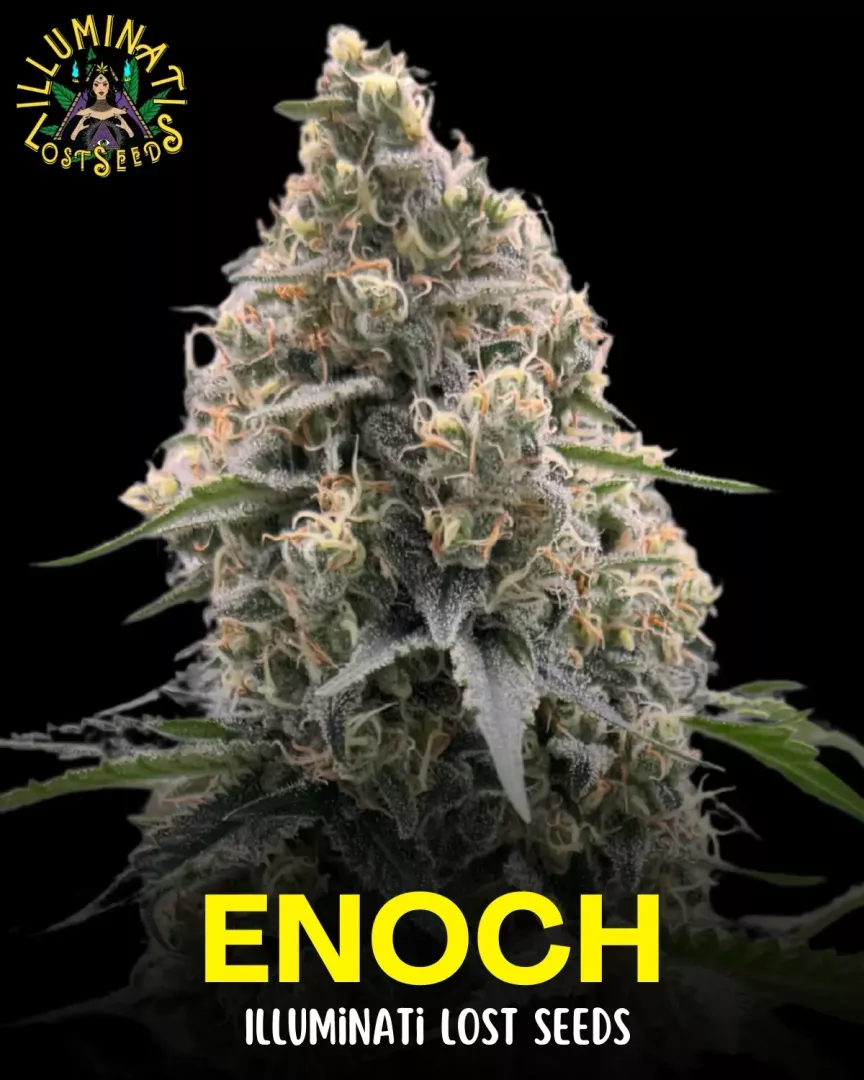
A feminized genetic with a mystical name that evokes an ancient library, forbidden manuscripts and a secret archive.
View product
The name suggests forbidden archives and hidden stories, making it ideal for a dark Halloween world full of secrets and conspiracies.
View product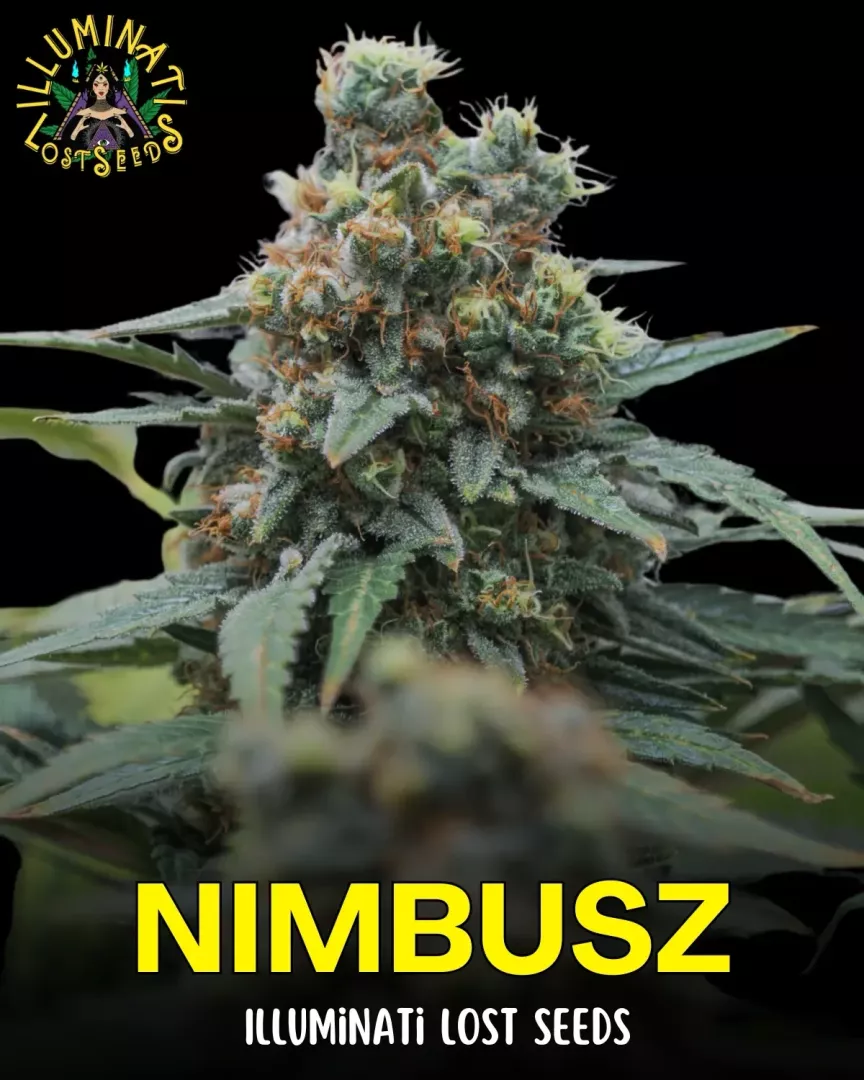
A genetic whose name brings fog, storms and mysterious autumn nights into the visual world of Halloweed.
View product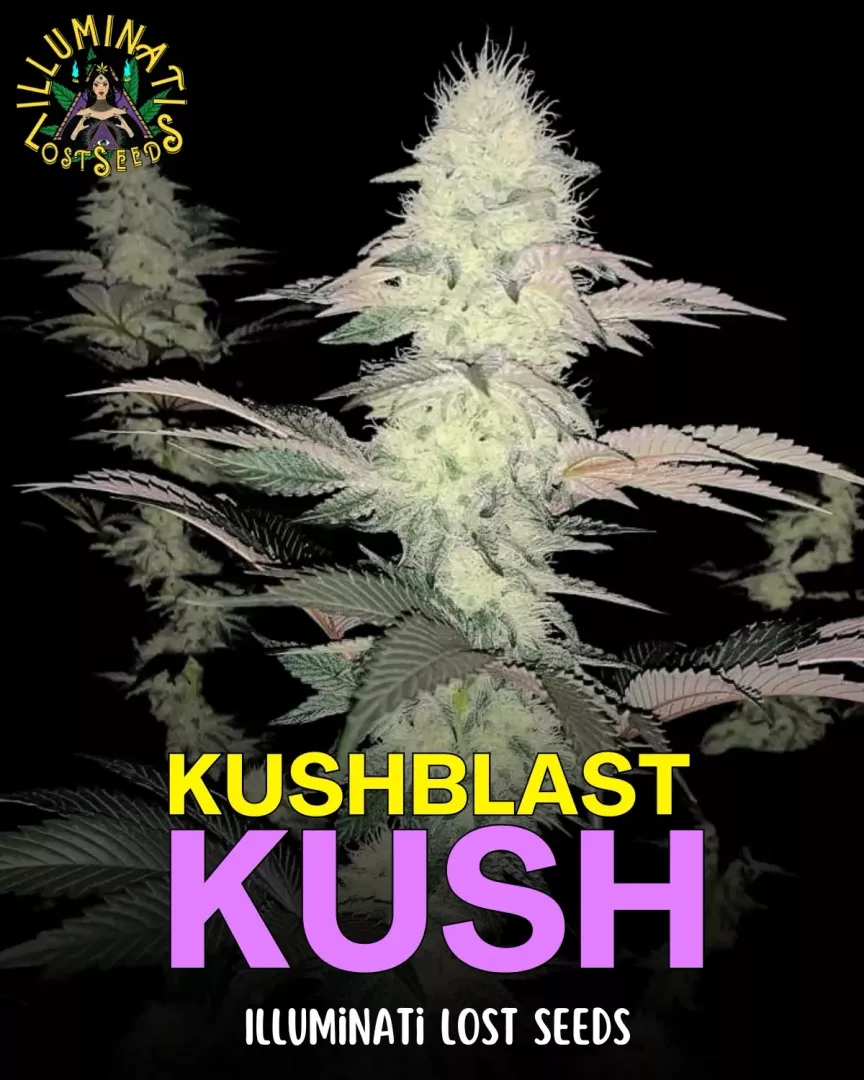
Its powerful name and connection with Dante's Inferno make Kushblast Kush a fitting finale to a Halloweed selection.
View productNote: product availability, variants and prices may change. Please check the current details directly on the relevant English Grow Island product page.
Bartholomew Alen – Grow Island
The Grow Island Blog explores cannabis culture, genetics and the grow world from an informative magazine perspective. In October, the Halloweed series approaches the subject with a lighter touch: horror films, popular culture, unusual genetics and stories beside which even the grow room suddenly appears to be an exceptionally friendly place.
Legal notice: This article is intended for cultural and general information. It does not encourage illegal cannabis use or illegal cultivation. Rules governing possession, consumption, cultivation and sale differ by country and may change. The law applicable in your location always takes precedence. Cannabis and products containing cannabis must be kept out of the reach of children.












Comments