Cannabis Laws in Austria 2026
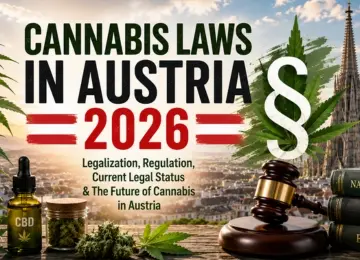
Austria and the Cannabis Situation in 2026
Legalization, regulation, the real legal landscape, and the future of cannabis in Austria
In recent years, cannabis policy across Europe has undergone major changes. While some countries have moved toward full legalization, others have introduced more cautious and gradual reforms. In 2026, Austria is still not considered a fully legalized cannabis market, although the regulatory environment is far more complex and nuanced than many people initially assume.
Based on Grow Island’s experience, there are still many misunderstandings surrounding Austrian cannabis laws. Many people automatically assume Austria will soon follow the same path as Germany or the Czech Republic, but currently there is no officially approved full recreational legalization.
Nevertheless, due to social, economic, and political developments, there is increasing discussion about:
• expanding the medical cannabis system
• personal use regulations
• reconsidering THC limits
• the growth of the CBD and industrial hemp market
• and the long-term effects of European cannabis regulations
The current Austrian situation can best be described as a transitional phase: not full legalization, but also no longer the same strict system that existed 10–15 years ago.
Is Cannabis Legal in Austria in 2026?
The short answer is still: no.
In Austria, the recreational possession, sale, and cultivation of THC-containing cannabis still fall under the Suchtmittelgesetz (SMG) — Austria’s Narcotic Substances Act.
This generally means that the following activities remain prohibited:
• cultivating THC-containing cannabis for narcotic production
• possessing flowering plants for that purpose
• selling or distributing cannabis
• import and export
• possession of larger quantities
However, it is very important to understand that Austrian practice often distinguishes between personal consumption and commercial activity. In cases involving small amounts for personal use, first-time procedures may often result in health-related or preventive measures instead of automatic imprisonment.
That still does not mean legalization, nor does it mean cannabis is officially accepted for recreational use.
The 0.3% THC Limit and the Role of Industrial Hemp
One of the most important legal distinctions in Austria is currently the 0.3% THC limit.
In line with EU regulations:
• cultivation of EU-certified industrial hemp may be legal
• certain low-THC products can be marketed
• hemp tea, hemp seeds, and hemp protein are available on the market
• the CBD market remains active in Austria
However, many people misunderstand this regulation. The 0.3% THC limit does not automatically mean that every cannabis plant is fully legal.
Authorities may still examine:
• the purpose of cultivation
• the THC content of the flowers
• how the plant is being used
• and whether there was intent to produce narcotics
For this reason, it is especially important for every grower to understand local regulations and legal distinctions.
Clones and the “Legal Grey Area”
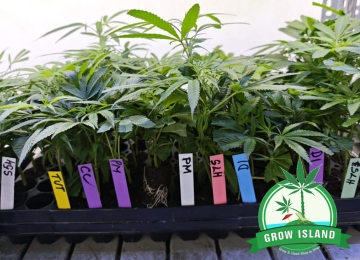
For many years, cannabis clones and plants in the vegetative stage have occupied a unique legal position in Austria.
In practice, they are often marketed as:
• ornamental plants
• collector’s plants
• or plants intended for leaf use only
The critical point is usually the flowering stage and the appearance of THC-producing flowers. According to Austrian regulations, once the purpose of cultivation becomes the production of THC-rich flowers, the situation may fall under the Suchtmittelgesetz.
This is why one of the most well-known characteristics of the Austrian cannabis market is this “grey area” approach, which authorities may interpret differently on a case-by-case basis.
According to Grow Island, this is exactly why the following remain extremely important:
• following local regulations
• monitoring legal developments
• and maintaining a responsible, informed approach
Medical Cannabis in Austria
Austria’s medical cannabis system is considerably more limited than systems in countries such as Germany or Canada.
Certain cannabinoid-based medications are available by prescription, however:
• there is no classic “medical dispensary” system
• the full flower-based medical market remains highly restricted
• medical access is much stricter than in Germany
Nevertheless, discussions about modernizing Austria’s medical cannabis system have become increasingly common in recent years.
Is Germany’s Legalization Affecting Austria?
Clearly yes — even though Austria has not introduced the same model.
Germany’s 2024 reform created major political and economic ripple effects throughout Europe. In Austria, more and more people are discussing:
• the possibility of a regulated market
• potential tax revenues
• reducing the black market
• and the growth of the European cannabis industry
However, as of 2026, there is still no officially approved Austrian recreational legalization plan.
The political environment remains divided: some actors support more open reforms, while others continue to advocate for a much more conservative approach.
Public Perception of Cannabis in Austria Is Gradually Changing
Although the legal system remains stricter than in some Western European countries, public attitudes are gradually evolving.
More people are openly discussing:
• the economic potential of cannabis
• medical applications
• the problems caused by excessive criminalization
• and modern regulatory models
At the same time, Austria’s CBD and industrial hemp market continues to grow, further contributing to a more open public discussion around cannabis.
What Can Be Expected in the Coming Years?
At the moment, no exact date or official legalization plan is known.
However, it is clear that cannabis policy in Europe is changing rapidly, and Austria cannot fully isolate itself from:
• German reforms
• EU regulations
• economic pressure
• and changing public attitudes
According to Grow Island, one of the biggest questions in the coming years will be whether Austria:
• maintains the current conservative system
• moves toward gradual decriminalization
• or eventually begins opening toward a regulated model
One thing is certain: in 2026, Austria’s cannabis situation is still in a transitional phase.
Full legalization has not yet happened, but due to social and economic changes, the topic is becoming increasingly important on both political and business levels.
According to Grow Island, the most important thing remains a conscious, responsible, and legally informed approach — especially in a rapidly changing European environment where cannabis regulation continues to evolve year after year.
Article created, written, edited, and graphic concepts designed by:
Bartholomew Alen
Grow Island • 2026
The Legal Situation of Clones and Young Cannabis Plants in Austria
This is one of the most well-known and debated areas of Austrian cannabis regulation.
The topic of young cannabis plants, clones, and hemp plants in the vegetative stage has represented a unique legal grey area in Austria for many years. Although the recreational cultivation of THC-containing cannabis is still not legal, in practice a system has developed between authorities and the market that is far more nuanced than many people initially assume.
According to current Austrian practice:
• non-flowering cannabis plants
• clones in the vegetative stage
• plants sold as ornamental plants
• as well as plants not intended for narcotic production
may, under certain circumstances, be marketed and displayed in growshops or CBD stores.
This is one of the reasons why, in recent years, Austria openly had stores offering:
• hemp clones (Hanfstecklinge)
• young cannabis plants
• CBD-dominant genetics
• and various hemp-based products
available for sale.
From a legal perspective, the issue begins when authorities determine that:
• the purpose of cultivation is the production of THC-rich flowers
• the plant enters the flowering stage
• or there is provable intent to produce narcotics
According to Austrian legal interpretation, the “narcotic” part of cannabis primarily refers to:
• the flowers
• as well as resin-containing plant material
This distinction led to the unique Austrian model in which vegetative cannabis plants existed for many years in a partially tolerated or semi-accepted category.
At the same time, it is extremely important to emphasize: legal interpretation may depend heavily on individual circumstances.
Authorities may examine:
• the purpose of cultivation
• the developmental stage of the plant
• the presence of flower formation
• the cultivation environment
• and the overall circumstances of the case
For this reason, a conscious and responsible approach — along with staying informed about local regulations — is especially important in Austria.
Cannabis Consumption Is Not the Same as Possession
This is one of the most interesting — and for many people, surprising — legal peculiarities in Austria.
In practice, cannabis consumption itself is difficult to punish as a separate standalone act. Legally, the issue is usually not the act of use itself, but the activities connected to it.
These may include:
• possession
• acquisition
• distribution
• import/export
• and cultivation
This has led to a strange and often contradictory situation where:
• cannabis use has become increasingly widespread socially
• CBD culture has grown significantly
• and cannabis is discussed far more openly in society
while full recreational legalization has still not taken place in Austria.
According to Grow Island, this contradiction is one of the key reasons why social and political debates surrounding cannabis remain highly active in Austria even in 2026.
Medical Cannabis in Austria
Austria’s medical cannabis system remains heavily regulated and operates within much narrower limits than in several other European countries.
While Germany has significantly expanded access to medical cannabis in recent years, Austria continues to apply a far more conservative approach. The system is primarily based on pharmaceutical and clinical frameworks rather than the classic “medical dispensary” model.
Currently, certain cannabinoid-based medications are available through medical prescription, including:
• Dronabinol
• Sativex
• and certain specialized cannabinoid-based pharmaceutical products
These are generally prescribed for specific medical conditions such as:
• chronic pain
• multiple sclerosis
• chemotherapy-related symptoms
• or certain neurological conditions
However, the classic “medical flower” system in Austria remains far more limited than in countries such as:
• Germany
• Canada
• or certain U.S. states
For Austrian patients, access to medical cannabis is still often:
• expensive
• bureaucratic
• time-consuming
• and limited in accessibility
According to many patients, one of the system’s biggest problems is that medical cannabis has still not been fully integrated into the traditional healthcare structure. As a result, many patients may face difficulties with:
• finding the right doctor
• navigating the prescription process
• dealing with authorization requirements
• and covering the high treatment costs
Nevertheless, interest in Austria has clearly increased in recent years regarding:
• medical cannabis research
• cannabinoid therapies
• and modern plant-based treatments
According to Grow Island, one of the key long-term questions will be whether Austria eventually opens toward a more modern and patient-oriented medical cannabis model.
What Is Happening to the CBD Market in Austria?
One of the most visible developments of recent years has undoubtedly been the explosive growth of the CBD market in Austria.
Across the country, there has been a rapid increase in:
• CBD shops
• hemp vending machines
• CBD flowers
• low-THC cannabis products
• and various hemp-based wellness products
Within a short period of time, the CBD industry became a major business sector in Austria. In many cities, CBD stores became completely normalized, offering:
• oils
• flowers
• cosmetics
• vape products
• teas and dietary supplements
for sale.
At the same time, from late 2025 and throughout 2026, major regulatory changes began to emerge.
The Austrian government introduced new regulatory directions suggesting that:
• legal low-THC cannabis products
• may gradually become connected to the tobacco monopoly system
• and could eventually be sold mainly through the Trafik retail system
According to current plans, this transition could become more fully implemented by 2029, fundamentally reshaping the Austrian CBD market.
This could represent a major change especially for:
• smaller CBD shops
• hemp stores
• the current market structure
• and the broader cannabis wellness sector
Many people fear that these regulations could significantly reduce the flexibility of smaller businesses, while others believe the new system may create:
• a more transparent market
• stricter quality control
• and a more stable regulatory environment
overall.
According to Grow Island, one of the biggest questions in the coming years will be how Austria attempts to balance:
• consumer protection
• government regulation
• economic interests
• and the rapidly developing cannabis industry
Germany’s Influence on Austria
It would be difficult to deny: Germany’s cannabis reform has created an entirely new situation in Central Europe.
The German reform that came into effect in 2024 not only triggered major changes within Germany itself, but also had a significant impact on cannabis policy throughout the region — especially in Austria.
Under the current German regulations, the following are legal under certain conditions:
• possession of up to 25 grams of cannabis in public
• storage of up to 50 grams at home
• as well as cultivation of up to 3 personal plants
This reform sparked major social and political debate in Austria as well.
In Austrian media, politics, and professional circles, the following question appears more and more frequently:
How long can the current Austrian system remain sustainable
while neighboring countries continue moving toward liberalization?
Germany is putting particularly strong pressure on Austria in three major areas:
• economic factors
• tourism-related impacts
• and efforts to reduce the black market
According to many analysts, the German model could have a major long-term influence on the Austrian cannabis market as well, especially because the two countries are closely connected economically and culturally.
Based on Grow Island’s experience, interest increased significantly after the German reform regarding:
• the future of cannabis regulation
• home cultivation opportunities
• modern cannabis genetics
• and the development of the European cannabis industry
At the same time, more and more Austrian consumers and businesses are watching closely to see what long-term economic results Germany achieves:
• whether the black market declines
• whether tax revenues increase
• how consumer culture changes
• and what effects emerge in tourism
Czech Reforms Are Increasing Pressure as Well
In 2026, the Czech Republic also introduced significant cannabis reforms, further increasing regional pressure on Austria.
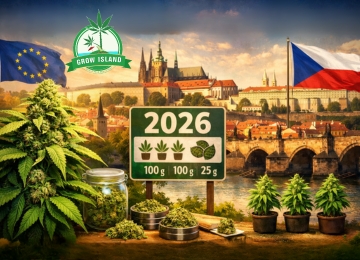
According to current information, the Czech Republic allows under certain conditions:
• possession of up to 25 grams in public
• storage of up to 100 grams at home
• and cultivation of up to 3 personal plants for adults over 21
This is especially important from both geopolitical and social perspectives, as more and more countries around Austria are beginning to move toward:
• decriminalization
• regulated cannabis markets
• or partial legalization of home cultivation
While Germany and the Czech Republic are gradually relaxing regulations, Austria continues to follow one of the more conservative cannabis models in Central Europe.
Over the long term, this could also create economic and political pressure due to:
• cannabis tourism
• cross-border consumer movement
• and increasing competition within the European market
Will Austria Legalize Cannabis?
At the moment, there is no certain answer.
As of 2026, there is no officially approved Austrian legislative proposal introducing full recreational cannabis legalization.
At the same time, several factors suggest that further changes may emerge in the coming years:
• the impact of Germany’s reform
• liberalization in the Czech Republic
• the growth of the CBD market
• increasing acceptance of medical cannabis
• and gradual changes in public attitudes
Many experts believe Austria will likely follow a much more cautious and gradual path than Germany.
This could involve:
• partial decriminalization
• expansion of the medical system
• reconsideration of CBD regulations
• or easing certain cultivation-related restrictions
However, full recreational legalization still does not appear to be immediately on the horizon.
According to Grow Island, one of the key questions in the coming years will be how effectively Austria can adapt to the broader European trend that is increasingly moving toward:
• regulated markets
• consumer protection
• quality control
• and reducing the black market
One thing is certain: by 2026, cannabis is no longer a peripheral topic in Austria.
Due to ongoing public debate, European reforms, and the rapidly developing cannabis industry, the coming years could become highly significant for the future of Austrian cannabis regulation.
The Current Cannabis Situation in Austria – 2026
Austria Is in a Transitional Phase in 2026
The topic of cannabis appears very differently in Austria today compared to ten or fifteen years ago.
Over the past years:
• social stigma has decreased
• the CBD market has grown significantly
• interest in industrial hemp has increased
• and a much more open public dialogue around cannabis has emerged
At the same time, reforms in neighboring countries — especially Germany and the Czech Republic — are placing increasing pressure on Austria’s political and economic environment.
However, it is important to remain clear: Austria’s current system still cannot be considered true recreational legalization.
THC-containing recreational cannabis still falls under the Suchtmittelgesetz (SMG), even if practical enforcement has become somewhat more lenient in certain cases over recent years.
This is especially true in situations involving:
• small amounts for personal use
• first-time proceedings
• or certain health-related and preventive measures
One of the biggest questions for the coming years will likely be whether Austria:
• maintains its current conservative model
• moves toward gradual decriminalization
• or eventually begins following the direction of German and Czech reforms
According to Grow Island, it is already clearly visible that cannabis policy across Europe is changing rapidly, while Austria still continues to apply a much more cautious approach than several neighboring countries.
In 2026, cannabis in Austria remains more:
• partially tolerated
• partially regulated
• and legally complex
rather than a fully legalized market.
One thing is certain: the cannabis issue has become an unavoidable social, economic, and political topic in Austria.
The decisions made in the coming years could shape for a long time the direction Austria chooses within the evolving landscape of modern European cannabis regulation.
Back to the posts








Comments