Cannabis and Sexual Freedom: Do Cannabis Users Enjoy Their Sex Life More?

In recent years, increasing attention has been paid to the relationship between cannabis use and sexual behavior. As cannabis becomes more widely accepted and legalized worldwide, and as social attitudes toward sexuality also evolve, the question arises: what impact does cannabis have on our sexual experiences and freedom?
The concept of sexual freedom covers many aspects – including sexual satisfaction, the joy of exploration and the ability to express one’s desires without inhibition. Since cannabis is known to influence mood, perception and brain function, it is an exciting question whether it can enhance or alter sexual experiences.
We can approach this topic from several angles. For example: Does cannabis use actually make sex more enjoyable? How does it affect libido, arousal or sexual satisfaction? Can cannabis use be linked to the reduction of sexual inhibitions, more diverse sexual practices or even the breaking of taboos? At the same time, the question also arises whether there may be downsides: for instance, can cannabis cause erectile dysfunction or weaken the emotional intimacy between two people?
In this comprehensive overview, we aim to shed light on the connections between cannabis use and sexual life based on available research and literature. We examine what scientific findings say about how cannabis influences sexual experiences, behaviors and related perceptions. Our goal is to provide a nuanced picture of the intertwining of cannabis and sexual freedom – offering insights useful for both individual decision-making and broader social dialogue.
Does cannabis contribute to greater enjoyment of sex?
Exploring the link between cannabis and sexual pleasure is no simple task and research findings are mixed. Some reports suggest that cannabis use may improve sexual function and enjoyment, but earlier studies paint a more complex picture. An interesting observation is that certain physiological and subjective markers of sexual arousal are associated with lower endocannabinoid levels (i.e., reduced availability of the body’s own cannabis-like compounds). This raises the possibility that the relationship between cannabis use and sexual arousal is complex and not necessarily purely positive.
Can cannabis cause erectile dysfunction?
Research into a possible connection between cannabis and erectile dysfunction (ED) has produced contradictory results. Some studies found an association between long-term, heavy cannabis use and a higher risk of ED, while other findings were less conclusive. A meta-analysis summarizing data from five case studies (including 3,395 healthy men) found that the prevalence of ED was significantly higher among cannabis users compared to non-users. In numbers: 69.1% of cannabis users experienced some level of ED, compared to 34.7% in the control group. Researchers estimated this to represent nearly a fourfold increased risk of developing erectile problems in cannabis users (OR ≈ 3.8; p = 0.02). However, it is important to note that the analyzed data showed significant heterogeneity (I2 = 90%) and due to methodological limitations, this result should be interpreted with caution.
In light of this, we must consider certain limitations. Due to legal restrictions surrounding cannabis, many studies were not conducted under optimal conditions, which may call into question the reliability of the results. In addition, individual reactions can vary greatly: factors such as frequency and duration of use, dosage and the consumer’s overall health can all influence whether ED develops. Not all cannabis users experience ED and even among those who do, other factors (such as stress, smoking or other health issues) often play a role.

Scientists have outlined several possible mechanisms that may explain how cannabis contributes to the development of ED. The main psychoactive compound of cannabis, THC, acts by binding to the brain’s endocannabinoid system, influencing neurotransmitters and neural pathways involved in sexual arousal and erection. Cannabis use may also affect the circulatory system (e.g., altering blood pressure and flow), hormonal balance (e.g., testosterone levels), and psychological factors (mood, anxiety, which in turn affect performance). It is also significant that regular cannabis use is often associated with other lifestyle factors (such as smoking, lack of exercise), as well as other health issues and medications that may also increase the risk of ED.
In summary: although some research suggests a possible link between cannabis use and erectile dysfunction, the current evidence is inconclusive. The wide range of individual variables and methodological challenges make it difficult to draw firm conclusions. More rigorously controlled studies are needed to fully understand the relationship between cannabis use and ED and to shape appropriate public health guidance or clinical recommendations.
Does cannabis affect your libido?
Many report that cannabis improves their sex life, yet scientific findings are mixed. While some claim cannabis may boost desire and enhance sexual functions, other studies point to more complex interactions. For instance, certain research suggests that the level of subjective sexual arousal may be linked to changes in endocannabinoid levels in the body.

What is sex like with cannabis? Survey results
An interesting survey asked 216 people who had tried cannabis during sex. Of these, 52.3% used it specifically to alter their sexual experience. The responses were mixed. 38.7% of participants reported that sex was better with cannabis, while 16.0% described mixed effects (sometimes better, sometimes not). 24.5% said cannabis occasionally improved sex, but not always. Only a very small minority (4.7%) indicated that cannabis may have worsened their experience.
Looking at specific effects, the majority reported clearly positive changes:
- 58.9% felt an increase in sexual desire (libido),
- 73.8% reported greater satisfaction during intercourse,
- 74.3% experienced heightened sensitivity to touch,
- 65.7% reported more intense orgasms,
- 69.8% said they relaxed more easily during sex,
- 50.5% noticed improved concentration (better focus on sensations and their partner).
Of course, not everyone experienced positive effects. Some reported that cannabis made them sleepy, while others said the opposite – they had trouble focusing on the act. Those who previously struggled to reach orgasm, some reported that cannabis helped them climax more easily – though not all of them said their overall sexual satisfaction improved.
What could be behind it?
Why do some people feel sex is better with cannabis while others do not? The exact reasons remain unclear. An interesting note is that German researchers found that during orgasm, the body releases endocannabinoids – compounds similar to those in cannabis, linked to the experience of pleasure. This suggests that our body’s “internal cannabis system” plays a role in sexual enjoyment.
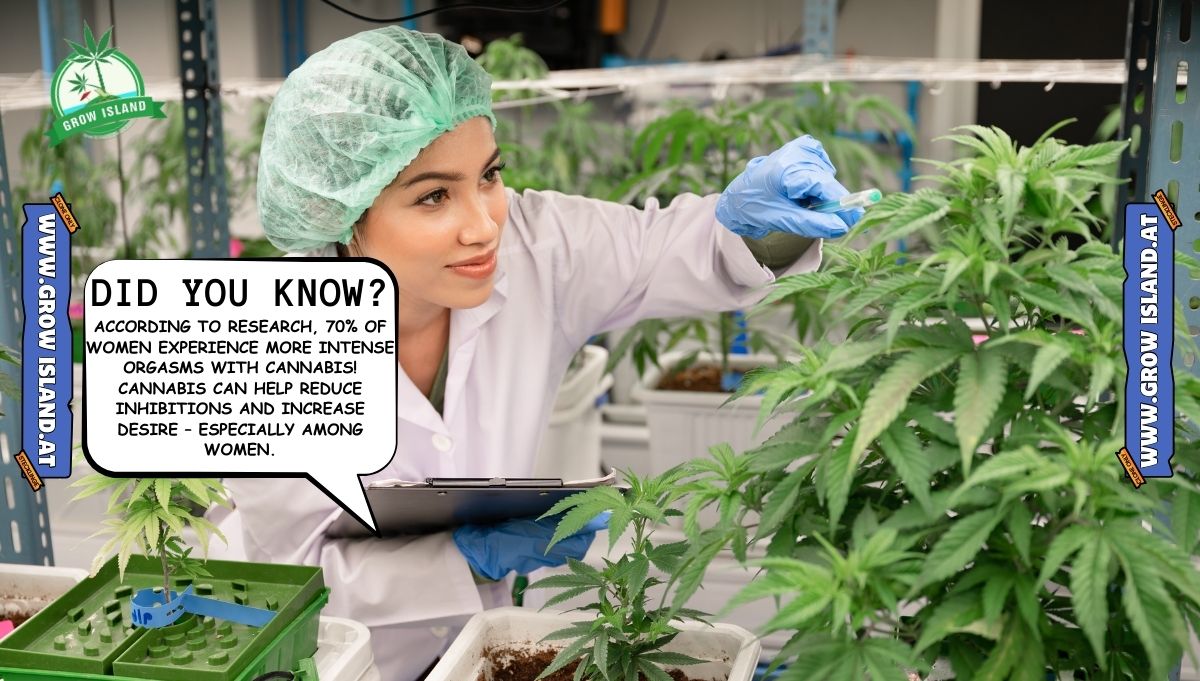
However, it is not entirely clear how externally consumed cannabis influences this system. It is likely that small amounts promote relaxation and heighten sensations, while large doses may do the opposite, reducing desire or the ability to orgasm – as some studies suggest (low dose = desire enhancement, high dose = desire reduction). Moreover, individual differences are enormous: some people tend to “turn inward” under cannabis, making it harder to connect with their partner. In such cases, cannabis use may cause a kind of emotional withdrawal, weakening erotic connection. For others, the opposite happens: they become more liberated, more emotionally and physically open.
Overall, it can be said that cannabis can indeed enhance sexual experiences for many – increasing desire, sensual pleasure and satisfaction – but not for everyone and not in all circumstances. Current evidence suggests that the effect varies from person to person and depends on many factors (dose, mood, relationship with the partner, etc.). To understand more precisely for whom and in what situations cannabis may be helpful or harmful in the bedroom, further research is needed.
Are cannabis users happier and more liberated in their sexuality?
Research suggests that people under the acute effects of THC generally experience less aggression and greater openness, peace and joy. Many report deep intellectual and spiritual experiences, along with a stronger sense of connection with themselves, others and the “universe.” Some studies estimate that frequent cannabis users display increased sociability, empathy, and creative thinking. For example, regular cannabis users have been shown to empathize more easily and attune themselves better to the emotions of others than non-users. These effects suggest that cannabis may foster psychological release and a more joyful, accepting state of mind in some individuals.
Of course, these effects can be shaped by numerous individual and environmental factors. The aggression-reducing and mood-enhancing effects of cannabis can be influenced by the user’s genetic background, current mental and physical health, past experiences, the social context of use and the type of cannabis consumed. It makes a difference whether someone smokes a joint at a party to relieve stress or at home to relax – and whether they are consuming a high-THC strain or one rich in CBD.
Although the precise biological and psychological mechanisms of cannabis’ mind- and perception-altering effects are not yet fully understood, experts are attempting to place them within a broader framework of behavioral and brain research. Evidence suggests that cannabis use may strengthen behaviors associated with trust and humility, thereby deepening social bonds and contributing to psychosocial balance. If cannabis increases empathy toward others, it naturally promotes prosocial behavior – encouraging kindness and helpfulness toward fellow humans. This may be particularly significant during adolescence, when cannabis-using youths could become more sensitive to others’ emotions, potentially aiding in the development of moral identity and social skills.
On a physiological level, cannabis activates the endocannabinoid system, which plays an important role in stress regulation and reward mechanisms. Research has shown that the amygdala (the brain’s fear and emotion center) of cannabis users responds less strongly to frightening or threatening stimuli. As a result, users often feel calmer, more peaceful and more comfortable in their own skin under the influence of the substance. Interestingly, this is in sharp contrast to the acute effects of alcohol, which is well known to increase irritability and hostility in many people, whereas cannabis generally has the opposite effect, softening the mood.
Taken together, these mood and behavioral changes may help cannabis users feel happier and more liberated in their sexuality. After all, someone who is less anxious and more open is more likely to confidently embrace their own desires. Reduced inhibitions and increased empathy can allow a person to surrender more fully to intimacy and find greater joy in it. It is therefore not surprising that many cannabis users indeed report feeling happier and freer in their sex lives.
(Note: Most of the studies cited were cross-sectional – meaning they examined participants at a single point in time – and therefore could not track how an individual’s behavior changes over the long term with cannabis use. In addition, many samples consisted of university students (often psychology majors), which limits the generalizability of the results. It is very possible that cannabis has quite different effects in other social groups. Nevertheless, these studies provide valuable insights and highlight how cannabis use may be associated with certain positive psychological traits among young adults.)
Have you become more open to new experiences under the influence of cannabis?
Many cannabis users report becoming more open to new experiences – including sexual ones. Since cannabis often reduces inhibitions and heightens perception, people may be willing to try things they would never dare attempt when sober. The altered state of consciousness and increased comfort may encourage some to boldly explore new aspects of their sexuality. For example, some people under the influence of cannabis become more open to same-sex encounters or feel inclined to explore certain fetishes or unusual desires – at least, some studies have documented such reports.
The psychoactive effects of cannabis can dissolve social conditioning and internal barriers, allowing individuals to express their true desires without self-judgment. In addition, the relaxed, euphoric state induced by cannabis can intensify sensory experiences, making new encounters feel more appealing and vivid. It is important to emphasize, however, that this does not mean cannabis creates new desires or alters sexual orientation. Rather, it allows individuals to more easily embrace existing – perhaps previously suppressed – desires.
Consider this: for many people, sexuality is fraught with anxiety, shame, and inhibitions. Cannabis (in reasonable amounts) may help to quiet these negative feelings, boosting confidence and self-acceptance. In this way, it can act as a catalyst in the process of sexual self-discovery. At the same time, everyone reacts differently: for some, cannabis increases adventurousness, while others simply feel drowsy and less inclined to experiment.
Overall, the connection between cannabis and the discovery of new sexual experiences varies greatly depending on individual psychological traits. For some, cannabis helps break down inner barriers and makes intimate encounters more exciting, while for others it brings no noticeable change. The phenomenon nevertheless highlights the complex nature of human sexuality and the diverse ways in which people approach and live out their desires – whether with cannabis or without.
Do you choose more diverse partners since using cannabis?
It is also worth asking whether cannabis use affects the types of partners people choose, or whether it makes their sex lives riskier. Some studies focusing on women have found intriguing correlations. It appears that in certain situations, women who use cannabis may engage in riskier sexual behaviors compared to those who do not use the substance.
In one study, for example, it was found that women who used cannabis:
Were more likely to engage in condomless sex with their steady partner compared to women who did not use cannabis.
Similarly, they more often had unprotected sex with casual partners if they had consumed marijuana.
Moreover, in paid sexual encounters (when someone engages in sex in exchange for money or other compensation), cannabis users were more likely not to use protection.
In addition, women who used cannabis were more likely to have multiple sexual partners at the same time than those who did not use the substance.
Interestingly, such correlations were not found with all psychoactive substances. For instance, in the same study, women who used opioids were actually less likely to have unprotected sex with casual partners than non-users. This indicates that different substances may influence sexual risk-taking in different ways. Other factors also played a role: for example, race/ethnicity had an effect on behavior. Among African American women, unprotected sex with casual or paying partners was less common than in other groups – suggesting that cultural and social factors also shape sexual practices.
It is important to emphasize that in this study, cannabis use in itself was not significantly associated with higher rates of sexually transmitted infections (STIs) or HIV. Instead, the data suggested that certain social groups (such as Black women) already faced higher STI/HIV risks regardless of cannabis use. This highlights that differences in sexual health outcomes are often rooted in deeper social inequalities (such as access to healthcare, poverty, discrimination, etc.).
In summary: the relationship between cannabis use, partner choice and sexual risk-taking is quite complex. Some data suggest that under the influence of marijuana, certain individuals may be more likely to neglect protection and have multiple partners, but this does not mean that cannabis directly makes people “irresponsible.” More likely, a combination of factors – such as personality, life situation and sociocultural background – plays a role. Furthermore, other substances can affect sexual behavior in entirely different ways (as seen in the case of opioids). All of this points to the importance of approaching sexual health with a comprehensive, holistic perspective in prevention and education, taking into account patterns of substance use as well as broader social and interpersonal factors.
Does cannabis help you explore your sexuality?
An intriguing question is whether cannabis use can help people better understand and embrace their own sexuality. This is especially relevant for young people who belong to gender or sexual minorities, raising the issue of whether cannabis might contribute to the discovery or expression of their sexual identity. However, research suggests that the picture is also complex here and it may not be cannabis itself that plays the key role, but rather the psychological burdens and stress these youths face.
A large-scale survey conducted in Canada among high school students across several provinces sought to interpret the findings within the framework of minority stress theory. The researchers found that adolescents who were non-heterosexual or who did not fit into traditional gender categories (male/female) – such as gay or bisexual youth, as well as non-binary or transgender students – reported significantly higher levels of internal psychological problems (so-called internalizing disorders such as depression, anxiety, etc.) compared to their heterosexual, cisgender peers. At the same time, those youths at higher risk of such mental health issues were also more likely to use cannabis. Thus, there appeared to be a strong link between poor mental health and cannabis use in this population.
The detailed analysis led to three key findings:
- Girls, non-binary adolescents, and those belonging to sexual minorities (non-heterosexual) were much more prone to internal psychological disorders than boys or heterosexual peers.
- The more severe these internalizing symptoms were, the more likely it was that the individual also used cannabis. In other words, there appeared to be a near-linear relationship between the level of psychological burden and the frequency of cannabis use.
- In general, young people belonging to gender and sexual minorities were more likely to have tried some kind of psychoactive substance (including cannabis) at the time of the survey than heterosexual, cisgender youth.
How can we interpret all this? According to minority stress theory, young people who face disadvantages or prejudice in society (for example, a gay teenager dealing with homophobia or a transgender youth facing exclusion) are exposed to increased stress and psychological pressure. This chronic stress can more often lead to anxiety, depression or other internalizing disorders. The findings of the study suggest that these psychological problems may act as a mediating link between minority status and cannabis use. In other words, it is not that young people “discover” their sexual identity through cannabis, but rather that, because of the heavy psychological burden tied to their identity, they are more likely to turn to cannabis or other substances as a coping mechanism.
From this it follows that if we want to support these young people – whether in exploring and living their sexuality in a healthy way, or in preventing problematic substance use – the focus must first be on strengthening their mental health and making their environments more accepting. Researchers suggest that interventions designed to improve young people’s psychological well-being and coping strategies can be particularly important. Examples include therapies based on motivational interviewing or cognitive-behavioral programs, which in some cases have been shown to be effective in reducing substance use. At the same time, the broader environment must also be considered: a supportive family background, an accepting school setting and accessible, sensitive healthcare are all protective factors that can reduce the stress placed on minority youth and, indirectly, the risk of substance use.
Taking into account the characteristics of the Canadian sample studied (where, for example, cannabis is legal, which can affect usage patterns), the researchers caution against overgeneralizing the results. Still, the study highlighted the need for further research in this area. On the one hand, qualitative studies are needed to more deeply explore the specific stressors faced by young people in gender and sexual minorities, and how they themselves view cannabis as a coping tool. On the other hand, long-term, follow-up research is also necessary to understand precisely how cannabis affects their mental health and the experience of their sexual identity over time.
Has cannabis influenced your sex life?
The legal cannabis revolution taking place in the United States (and in many countries worldwide) has given fresh momentum to research on this topic. By 2020, the majority of the U.S. population was living in a state where cannabis could be used legally in some form. At that point, 11 states and Washington, D.C. had fully legalized cannabis for recreational purposes, another 28 states permitted medical use and only 11 states maintained full prohibition. Of course, this does not mean that cannabis use had been rare before – in fact, even during the years of prohibition, cannabis was one of the most widely used psychoactive substances, and estimates suggest it had become one of the most valuable agricultural crops in the United States.
Yet despite its widespread use, few scientific studies had focused specifically on how cannabis affects the quality of sexual experiences. Recently, however, two new studies attempted to fill this gap. Their results seem to confirm earlier anecdotal observations: a significant proportion of people feel that cannabis adds something extra to sex.
The first noteworthy study was conducted at the University of British Columbia in Canada. Researchers surveyed 216 cannabis users who had used marijuana during their sexual encounters. The results were quite telling: the vast majority of respondents reported positive changes. Some highlights include:
- 74% reported being more sensitive to erotic touch,
- 74% said their sexual satisfaction increased,
- 70% felt more relaxed and “present” in bed,
- 66% found orgasms more pleasurable under the influence of cannabis,
- 59% reported an increase in sexual desire (higher libido).
It is also worth noting that half of those who had previously struggled to reach orgasm were able to achieve it when using cannabis. Still, the effects were not uniformly positive: 41% of participants reported mixed outcomes (sometimes cannabis improved things, sometimes not), while 39% consistently rated sex as better with cannabis. Only a very small fraction – 5% – said marijuana generally made sex worse for them.
Another study was carried out in the United States by researchers at Saint Louis University. They surveyed 373 women attending routine gynecological visits, asking whether they had ever used cannabis immediately before sex. One-third of the women answered yes. The results revealed that women who regularly used a small amount of marijuana right before sex were twice as likely to report highly satisfying orgasms compared to those who had never or rarely done so. Put simply: women who consumed cannabis before sexual activity were much more likely to describe their experiences as deeply satisfying.
Of course, these studies also had limitations. Both relied on convenience samples – participants were not randomly selected but rather those who were willing to take part. For this reason, the findings cannot be generalized to all women or all cannabis users. Nonetheless, the results align with many other sociological observations and provide valuable insight into how cannabis may affect people’s sexual experiences.
Can cannabis improve emotional bonding between partners?
Last but not least, it is worth considering how the shared use of cannabis affects relationship intimacy. In both scientific and popular debates, the question often arises of how different substances influence the bond between two people. Some argue that substance use (whether alcohol or cannabis) undermines relationships: reducing satisfaction, increasing conflict, and even contributing to divorce. Others, however, believe the effect is not so clear-cut and that there may also be positive sides. An interesting example is that some studies have found that married couples who drink alcohol together tend to be somewhat more satisfied with their relationship in the long term than couples where only one partner drinks – presumably because drinking together creates a shared experience that brings them closer.
Similar questions have been raised in relation to cannabis. Can cannabis enhance emotional bonding and intimacy between partners? A recent study – published in the scientific journal *Cannabis* – sought to answer this very question. Researchers (psychologists from the University at Buffalo and the University of Houston) examined 183 heterosexual couples, all of whom were regular marijuana users (consuming at least twice a week). The couples were asked to keep a diary for 30 days via a mobile phone app. In it, they recorded both when they used cannabis and when they engaged in intimate interactions or affectionate conversations in which they experienced love, care, or support for each other.
The analysis of data from the 30-day period yielded several noteworthy findings:
- On average, couples reported some kind of intimacy event every other day (an affectionate moment or conversation).
- These intimate moments occurred more frequently in the late afternoon/evening hours (typically after 5 p.m.) than earlier in the day.
- Women reported more intimacy events than men – meaning that from the women’s perspective, intimacy was experienced somewhat more often.
- According to the diaries, participants consumed cannabis roughly every two days.
- Men reported slightly more frequent marijuana use than women (in other words, the male partners admitted to higher consumption).
- The most interesting finding: couples were significantly more likely to report an intimacy event within two hours after cannabis use than at other times. What’s more, this was independent of whether both partners used cannabis together or only one of them did.
What do these findings mean? According to the researchers’ interpretation, it seems that when couples use cannabis together (or in each other’s company), it is often followed by a period of greater emotional intimacy. It is worth noting that – unlike earlier alcohol studies – here it was enough for just one partner to consume cannabis for the intimacy effect to appear. In other words, both partners didn’t necessarily need to “join in” for some cuddling or an emotional conversation to take place.
Of course, it is important to add that causality cannot be proven in such studies. It may not be cannabis itself that causes intimacy, but rather that couples who already tend to spend more quality time together are also more likely to use cannabis together. It is also possible that shared cannabis use serves as a kind of ritual that brings couples closer – but in that case, it is the shared activity itself that matters, not the substance. To understand this more precisely, further research is needed. For now, however, the findings suggest that sharing cannabis with a partner can be experienced as positive and may potentially strengthen emotional bonds between partners.
References:
- Relationship Between Cannabis Use and Erectile Dysfunction: A Systematic Review and Meta-Analysis.
- How Cannabis Alters Sexual Experience: A Survey of Men and Women.
Cannabis consumption and prosociality. - The Influence of Cannabis and Alcohol Use on Sexuality: An Observational Study in Young People (18–30 Years).
- Association between cannabis use and sexual behavior among adolescents aged 12–15 years in 21 low- and middle-income countries.
- Associations between Cannabis Use and Sexual Risk Behavior among Women under Community Supervision: A Brief Report.
- Adolescent Gender Identity, Sexual Orientation, and Cannabis Use: Potential Mediations by Internalizing Disorder Risk.
- The Latest on the Sexual Effects of Marijuana.
- Can Marijuana Improve the Quality of Your Relationship?
Which strains may be a good choice for intimacy?
According to research, enhancing the sexual experience often depends on the right terpene profile. Healthline experts suggest that limonene-rich, high-THC hybrids (e.g., Do-Si-Dos, Wedding Cake) may produce body-warming euphoria and increased libido. Other studies indicate that Kush-type strains can reduce anxiety (Bubba Kush, Skywalker OG, Studio54, etc.), while hybrids containing beta-caryophyllene and humulene (e.g., Zkittlez) may help ease pain.
From the Grow Island selection, strains with similar effects include:
• Kushblast Kush – terpene profile rich in limonene, myrcene, caryophyllene, and humulene. This combination provides mood-enhancing, stress-reducing, and body-relaxing effects, which can help you unwind with your partner and heighten the senses.
• Win Gardumim Leviosa – a hybrid containing Do-Si-Dos, offering deep muscle relaxation and mental calm thanks to its myrcene, limonene, and linalool content. While it tends to have a couch-lock effect, it can be ideal for a long, relaxing evening or a massage.
• Hazelightyear – 90% sativa with high limonene and pinene content. Uplifting and creativity-boosting; ideal for couples seeking a more energetic, playful experience together.
It is important to note that every body reacts differently to cannabis, and not everyone will experience the same effects. For some, it may trigger euphoria and heightened sensuality, while for others it can cause anxiety or drowsiness.
Back to the posts



Comments